
New 4D Product Release Cycle: Everything You Need To Know

February 5, 2020
2 min read
You may notice that beginning with 4D v18, the naming convention and intervals of our product releases have been changed. It’s for good reasons. Here’s everything you need to know about these changes:
The R-releases will now be referred to as “Feature Releases”. They will continue to be released every three months with each release including new features, as well as updated libraries, system APIs, and bug fixes. Use the Feature Release branch when you want to use the state of the art technology and new functionalities as soon as possible.
The 4D v18.x releases, often called “dot releases”, will now be referred to as “Long Term Support Releases” (aka LTS-Release). Starting with 4D v18, the release interval will be extended to 24 months to give you more time to use and deploy a version. Support time will be 36 months, giving you a full year following a new LTS release to migrate from the previous release.
The new release interval improves future project planning:
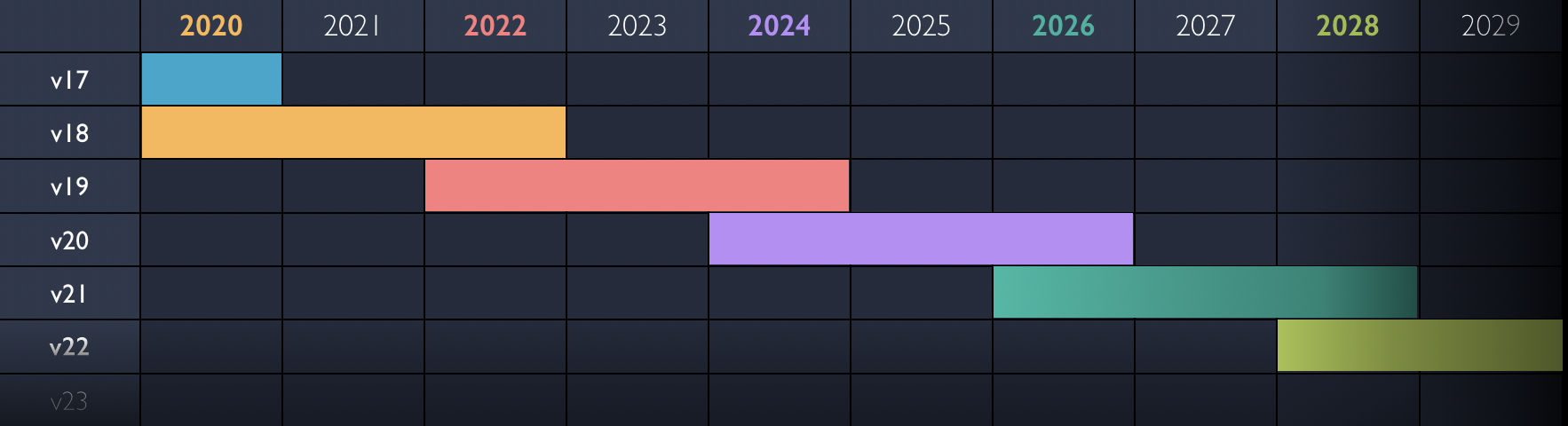
Use LTS versions when you want a specific feature set in a stable, unchanged environment for a longer period (i.e., no new features added, only bug fixes and library updates). Click here to learn more about our new strategy regarding the 4D product release life cycle, and If you need help selecting the release that’s right for you, don’t hesitate to contact a sales representative.
Got a question, suggestion or just want to get in touch with the 4D bloggers? Drop us a line!
* Your privacy is very important to us. Please click here to view our Policy
Comments are not currently available for this post.