
Use collections to write and read in 4D View Pro
If you need to read or write hundreds of different values or formulas, you can do it faster, easier, and at the same time by using collections. New co...

July 25, 2019
1 min read

If you need to read or write hundreds of different values or formulas, you can do it faster, easier, and at the same time by using collections. New co...

When programming an application, you may need to know where you are in your code, especially when one method calls other methods, which may then call ...


We're pleased to announce the launch of beta testing for 4D v17 R6! Without further ado, let’s take a look and see what this R-release has in store fo...


4D v17 R5, one of the most feature-rich R-releases ever delivered, is now available! Since we can't list all of the nearly 30 features in a single bl...

Blog post by guest author Kirk Brooks, a 4D developer from San Francisco: Visiting 44 cities around the world to bring all the latest 4D develop...

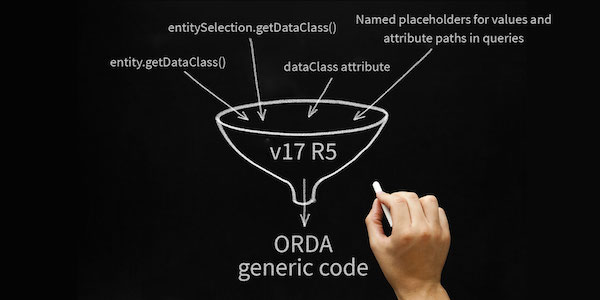
ORDA has its share of features with 4D v17 R5, including various ways to write generic code. Writing generic code allows you to centralize your code ...


View settings are used to define how a 4D Write Pro document should be displayed. Until 4D v17 R5, these settings could only be modified using the con...

Have you ever been flooded by confirmation dialogs, alert boxes, and contextual help windows that make it nearly impossible to locate the form window ...

Prior to 4D v17 R5, you may have discovered upon opening your 4D Write Pro document that the displayed font is not what it is supposed to be! If the d...

Using ORDA to access large tables (especially those with relations) in Client/Server mode has been greatly enhanced. With 4D v17 R5, you’ll see 2-3xs ...
Got a question, suggestion or just want to get in touch with the 4D bloggers? Drop us a line!
* Your privacy is very important to us. Please click here to view our Policy