
4D Write Pro – A Wizard to Create Tables with Data
Over the last few versions of 4D Write Pro, many table-related features have been added. You can easily create tables based on database data using con...

August 16, 2023
1 min read

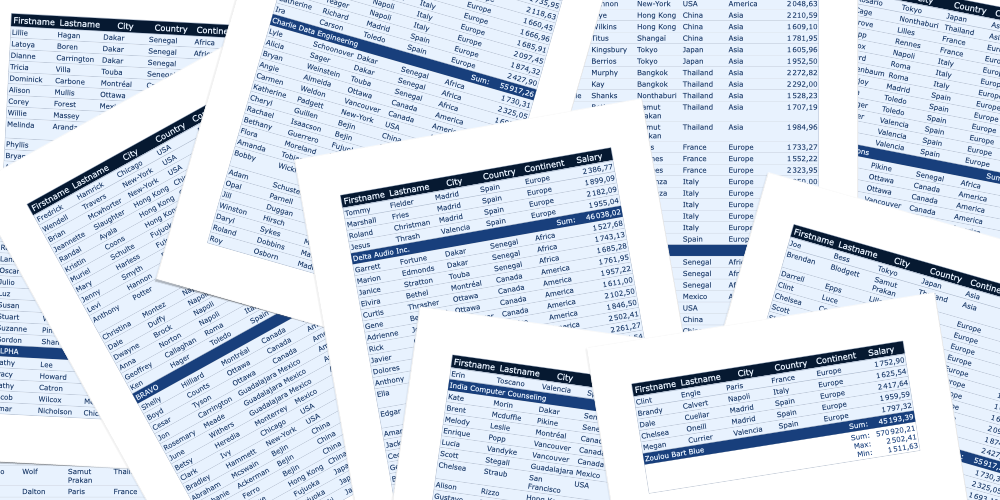
Over the last few versions of 4D Write Pro, many table-related features have been added. You can easily create tables based on database data using con...

A new build4D component has been available on GitHub for a few months. It empowers you to effortlessly create a compiled project or a component. Thing...

Since several versions of 4D, different features have been added to create your own build chain. For example, the creation of a ".zip" folder, t...

Data Explorer allows you to view the data in your database. You can choose which fields to display, organize, filter, and sort the data. With 4D v20,...

To allow you to make the most beautiful interfaces, we continue to improve the form objects. Since 4D v19 R6, you can define a rounded border for stat...

The "Find and Replace" feature in the code editor has existed for many years. Developers can easily and efficiently search and replace code, especiall...

Retrieving the list of unique data elements is always helpful when manipulating data. In some cases, retrieving the number of occurrences of each valu...

The "Help" menu of a software is handy. Obviously, you have a menu item to open the online documentation of the software, but also how to contact the ...

Formatters allow you to format the displayed data or to define behavior when the user touches the data. The input controls follow the same principle. ...

Actions allow users to interact with the application to change the customer's address, add a new contact and modify a picture. In the 4D language, an...
Got a question, suggestion or just want to get in touch with the 4D bloggers? Drop us a line!
* Your privacy is very important to us. Please click here to view our Policy