
Take Control of Standard 4D Components
As a 4D developer, you often want full control over what gets included in your projects. Starting with 4D 21, you can now decide which components prov...

October 14, 2025
1 min read

As a 4D developer, you often want full control over what gets included in your projects. Starting with 4D 21, you can now decide which components prov...

With 4D 21, AI takes a giant leap forward. At the heart of this evolution is AI Kit’s tool calling, a massive addition that transforms the way you int...
Beta testing for 4D 21 starts today—enabling you to run semantic vector queries directly in ORDA, use AI tool calling to expose 4D methods inside AI c...


In 4D applications, large documents are commonplace: financial reports, internal guidelines, technical manuals… Searching for an exact keyword often i...

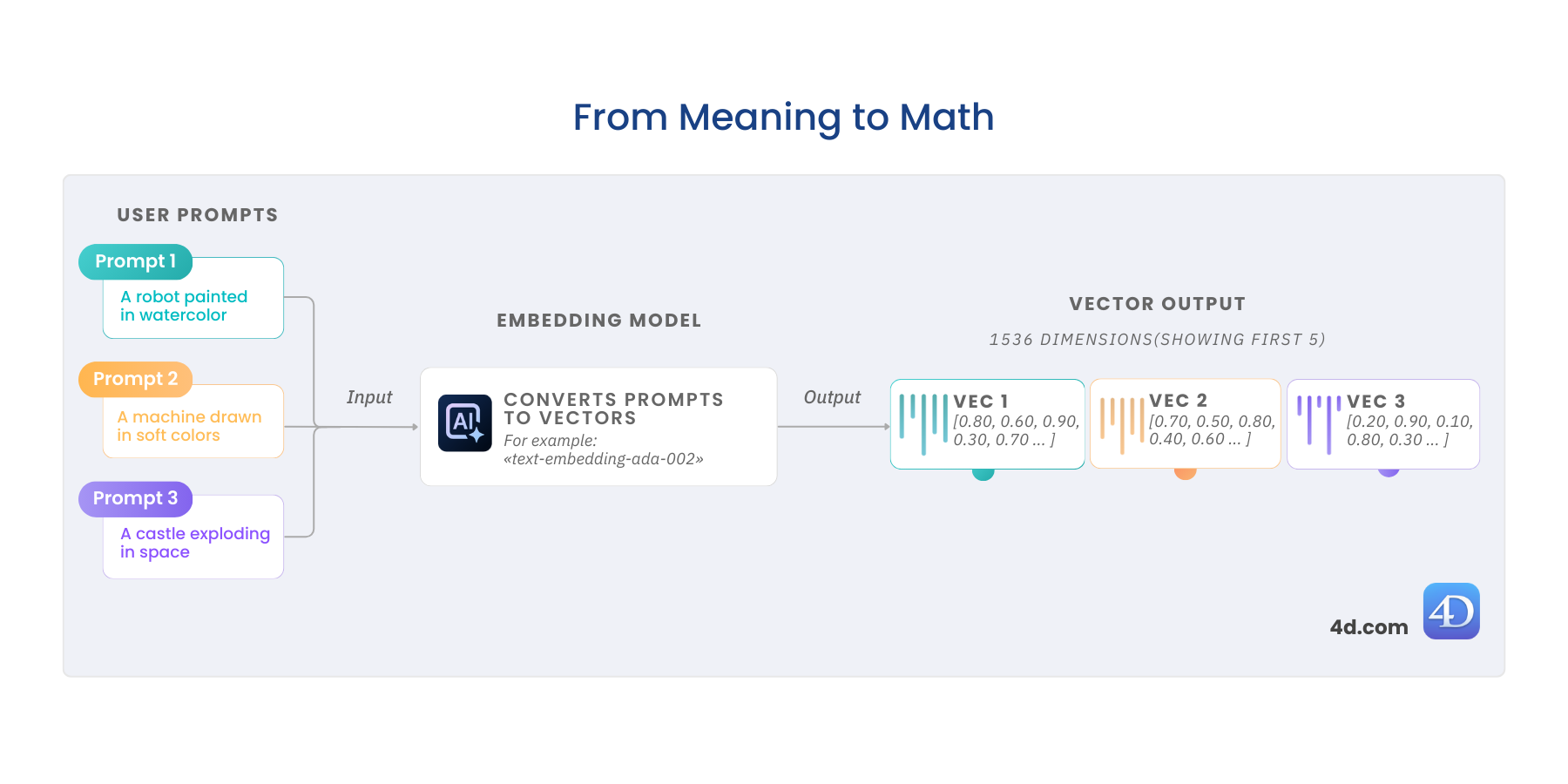
Your users don’t think in filenames or folder hierarchies. They think in ideas. “A robot painted in watercolor.” “A sunny beach filled with colo...

In many business applications, users enter or receive unstructured text: customer feedback, internal notes, support tickets, reports, and more. This c...

Starting with 4D 20 R10, UUIDs are now generated directly using an internal algorithm instead of relying on system functions—giving you better control...


In many 4D business applications, documents are everything — technical notes, reports, manuals, internal guides. But when users can’t remember the exa...

You know the pain of expense reporting — not for you, for your users. The receipts piling up, the manual entry, the typos that slip through. With 4D A...


When working with modern applications, especially those involving Artificial Intelligence, natural language processing, or spatial data, vector math i...
Got a question, suggestion or just want to get in touch with the 4D bloggers? Drop us a line!
* Your privacy is very important to us. Please click here to view our Policy