
Use ORDA to boost performance in Client/Server mode
Using ORDA to access large tables (especially those with relations) in Client/Server mode has been greatly enhanced. With 4D v17 R5, you’ll see 2-3xs ...

June 5, 2019
1 min read

Using ORDA to access large tables (especially those with relations) in Client/Server mode has been greatly enhanced. With 4D v17 R5, you’ll see 2-3xs ...

As a 4D developer, you may have already activated the debug log to troubleshoot problems. 4D v17 R5 introduces several improvements to help you analyz...

As a 4D developer you often need to manage end users with your own directory system. For internal users, you might create a few profiles with differen...

In a previous post, we discussed how to get started with data file encryption. Now we're going to discuss an additional way to work with encrypted dat...


You asked for a way to run multiple clients on the same computer AND simultaneously connect them to the same 4D Server. We not only heard you, we're g...


As promised in a previous post, each R-release includes more advances related to email functionality, unlocking its hidden power. 4D v17 R5 provides ...
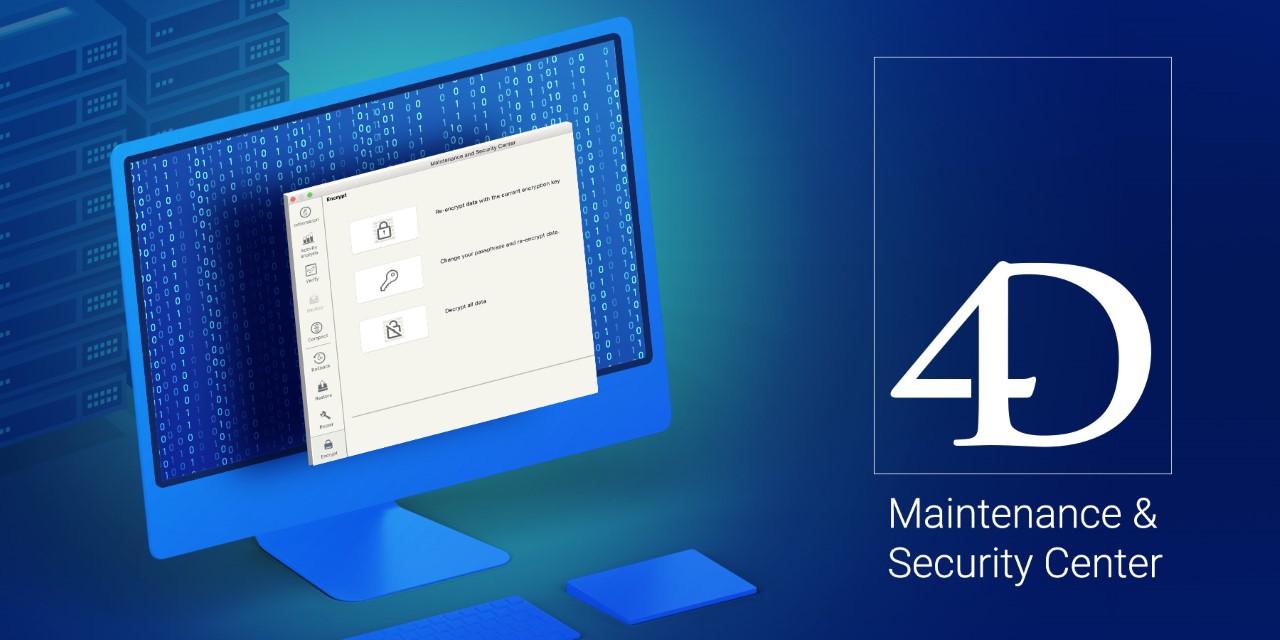
In a previous blog post, we announced new data encryption tools for your 4D databases. Now it's time to get our hands dirty and learn more about these...

4D continues to deliver features to help you create your own applications to monitor your servers. From programmatically retrieving information about ...

As a developer, you're aware that improving the quality of your developments is often based on unit tests. In order to launch these tests, developers ...


4D v17 R3 takes your database analysis a step further by enabling you to create a customized server administration dialog. Following the ability to re...
Got a question, suggestion or just want to get in touch with the 4D bloggers? Drop us a line!
* Your privacy is very important to us. Please click here to view our Policy