
Project databases: beautify your forms with style sheets
Classic 4D binary structures let you define style sheets to specify the font, font size, and text style to use in your forms for both the macOS and Wi...

November 8, 2019
1 min read
Build better 4D applications with practical patterns and technical deep dives from our blog.

Classic 4D binary structures let you define style sheets to specify the font, font size, and text style to use in your forms for both the macOS and Wi...

We've got an exciting new feature to announce in 4D v18 and the title may have already given you a hint! This feature opens new possibilities for cli...


Project databases, the headliner of the 4D v18 release, allow distributed teams to work collaboratively by storing an application's code in a source c...

Blog post by guest author Cannon Smith, a 4D developer from southern Alberta, Canada: The introduction of collections and entities has dramatica...


With 4D v17 R5, we showed you how easy it is to manipulate an object to retrieve the attributes of a file or folder. Things have gotten even easier th...

Ever need to analyze the traffic of your ORDA requests between a client and the 4D server? Sometimes it may take a while to receive a response from th...

The power of dynamic forms was introduced with 4D v16 R6, allowing you to build your forms on the fly by building them in an object or loading them fr...

In 4D v17 R6, ORDA queries are becoming increasingly more powerful and concise. This blog post is for those of you who need more sophisticated search ...

When programming an application, you may need to know where you are in your code, especially when one method calls other methods, which may then call ...

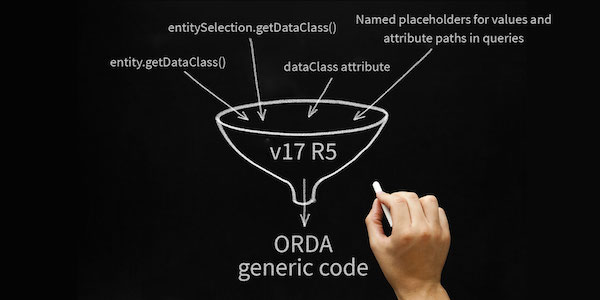
ORDA has its share of features with 4D v17 R5, including various ways to write generic code. Writing generic code allows you to centralize your code ...
Got a question, suggestion or just want to get in touch with the 4D bloggers? Drop us a line!
* Your privacy is very important to us. Please click here to view our Policy